Welcome

Hello.

Let's have fun together. I'll create things and you observe me.

This is a blog detailing all the projects I work on. It's a record of where things are at and a pin board of small random bits and pieces of creation.

I share anything useful I've come across during development, so if you're trying to solve a similar problem checking the labels on the right may be of assistance.

Feel free to leave a comment. Also, please take note that 90% of these blogs are compiled at 3 in the morning. The true hour of the day.

Enjoy your stay.

-Ryan
Showing posts with label sketches. Show all posts

Wednesday, 23 September 2009

Resuscitation

Right, where was I? It's been a while. What happened? Where have I been? What have I done, and why have I returned?

I needed time to consider what I'm doing in my life and where I want to go. I needed to think about the world I'm in and what role I play, as I felt that leaving this issue largely unattended was the cause of a lot of the difficulties I have been having in progressing.

It's a long story, but I believe I know the answers as best I can now, and am moving forward again. So, does art still play a role in my life? Certainly; that is to say of course it does. The direction and focus of my art has become clearer, though.

I doubt I've mentioned it on here before, but I'm very much interested in broad social issues. There's a lot of things about day to day life and society in general that have bothered me for a long time. I used to be very critical, negative and irritable about a lot of things. Over time, however, my frustration has given way to determination and clarity.

Over the last couple of years I've read things here and there on the net, and each item has gotten me closer to a big picture of society. Much of this culminated in the discovery of the Zeitgeist Movement and the Venus Project. To me, these now are the principle concern of my efforts. If you are unfamiliar with them, I urge you to look at them. There's movies, podcasts and books (just the tip of the iceberg). A wealth of information that will most assuredly broaden your perception.

I've actually been considering how to marry this blog to my Venus Project focus. Either a sister blog will be created, or this one will need to be reworked. Still deciding...

So back to my art. I will try to the best of my ability to use what artistic skill I have to help spread awareness of the Zeitgeist Movement and its core ideas. Where exactly that goes, I don't really know. I imagine a lot of it will be things like banners, posters and fliers. Though I did have a few chats with someone about making a Venus Project themed comic for a while. The possibilities are many, at any rate. This is the first real thing I've turned out:
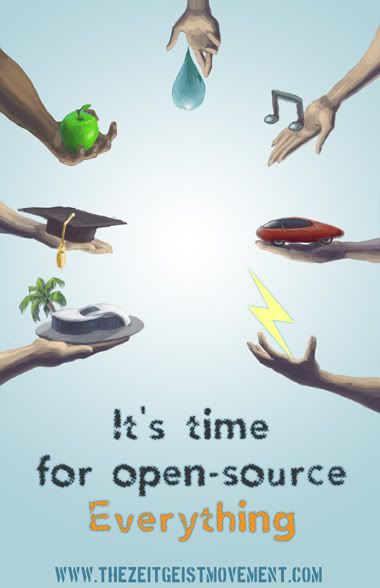

It was originally conceived as part of a series of posters to be placed around university campuses. The idea I had was to have different posters for different schools within the institution, so concepts could be presented to people in ways that would appeal to what they study. For instance, you have issues about behaviourism in the Psychology buildings, issues about censorship and philosophy in the Arts building, and, as is the case with the above poster, issues of technology in the IT and Engineering buildings, etc. I have an idea for a business one which I hope to turn out soon.

Just for fun, here's a concept sketch I did for the Venus Project comic:
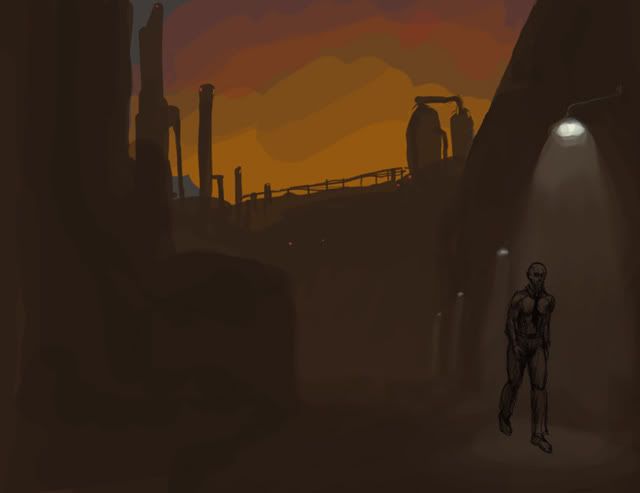
The protagonist within his gloomy industrial work center

Aside from that, I will continue my artistic study in order to improve my skills. Not a great deal of time has been committed to this, but progress is being made nonetheless. Here's how it's shaped up:
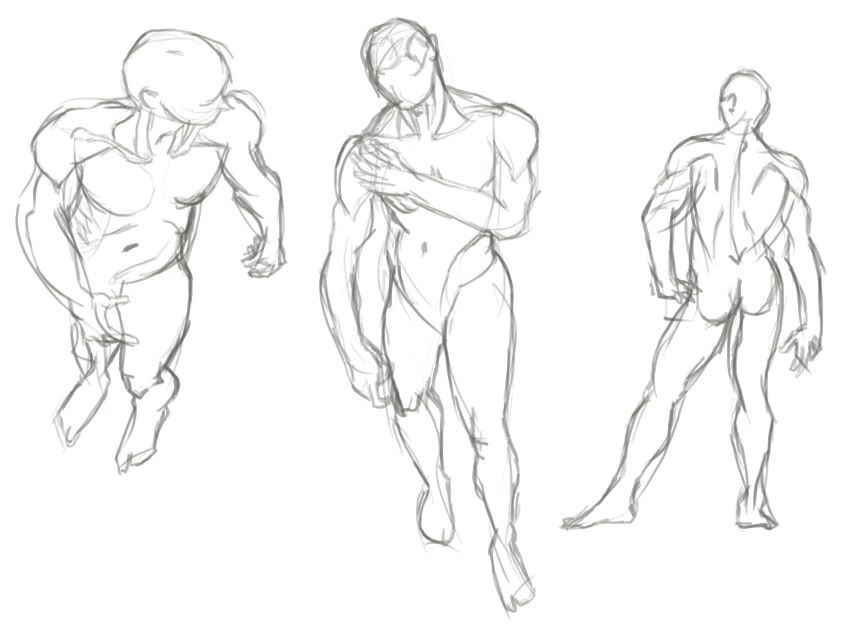
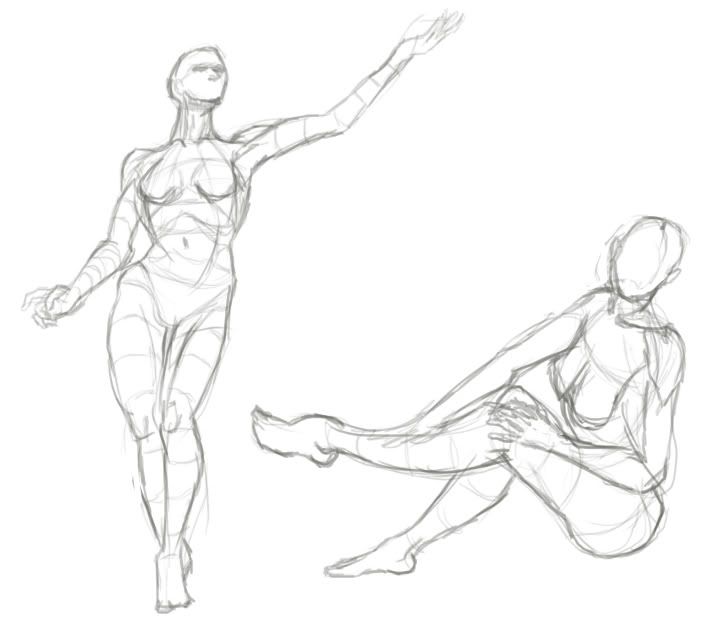
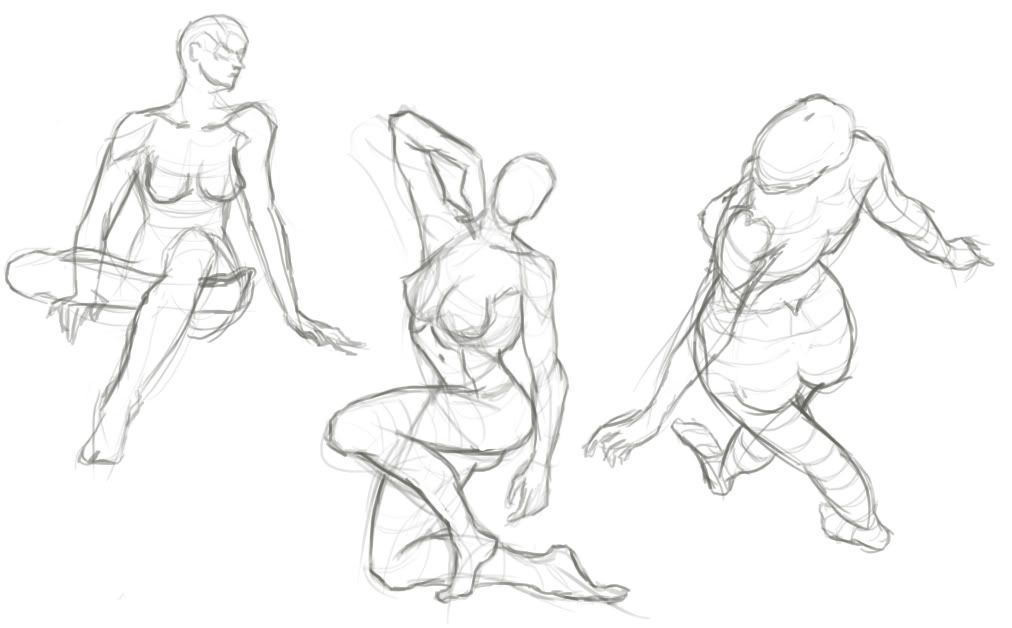
All posemaniacs references. These were mainly concerned with getting gesture and loose, confident strokes.

Photo reference. These were for just studying real people. The second woman in particular has a very interesting body.

Mainly posemaniacs stuff. Playing around with charcoal brushes. I really like the grittiness and ambiguity it gives pieces. I see myself using things like this a lot more.

Just a weird thing I did. Originally it was meant to be a concept sketch for a new pixelation avatar. I basically had this concept of a very concave face shape and glowing eyes, but it ended up as a goblin man painting, so, there you go...

Painting concept; something I'd love to do on a traditional medium at some point. Part of a series on the body and spirit. Part of a long, intricate vision I had while meditating.

Anatomy study needs to be returned to. Shading study could also use some redressing, but for the most part I'm feeling good about the direction I'm heading. Very happy with the palette I've developed, makes work very fast and easy. Now I just need to get a good selection of brushes going and I'll be set.

P.S. I cut my hair!

Thursday, 15 January 2009

Multi Yodel Scope

So, I've been on holidays for two months or so, and have been partaking in eclectic activities. Most of these are not significant to the focus of this blog, however I have managed to glean some constructive work from this time.

First up, I've given some attention to restructuring Synergy to support multicore processing. I had the design goals to allow the engine to scale with cores at run time, to have next to zero locking mechanisms in the code, and to have the multicore functionality as transparent as possible.

What I ended up with is largely a combination of two materials I read. The first is an introductory article to writing multicore games for the Xbox 360, which gives a good overall breakdown of an engine's structure into parallel processes. The second is Valve Corporation's presentation on Source Engine's multicore concepts.

Taking these two together, I basically have two `Delegator' threads that run through the structure outlined in the 360 article as 2 parallel processes. Every significant independently executable function within those threads is called with a function wrapper task(), which takes a pointer to the function to be run, and up to four parameters caste to void type. The task() function takes the information passed to it and builds a linked list with it, and then pushes that linked list onto a lock-less task queue.

All the while this is happening, there is a thread pool with some number of threads all executing a peon() function. As the name might suggest, peon functions continually check the task queue for a task, and if they can grab it they do so, break the linked list up into a function call, and then execute the function representing the task to be done. Upon completing the function, the thread returns to its peon() function to continue checking for more work to do. As you might guess, the number of peon threads in operation is related to how many CPU cores are visible to the engine. The more cores available, the more peons can be running.

Within all of this is a simple semaphore system whereby a task in the queue can be associated with a semaphore. This allows the delegator threads to wait until a certain cluster of tasks in the queue are completed before adding more tasks. This is a necessary evil simply due to the serialised structure of games themselves, and at the moment is the most logical solution I can think of. This is, in fact, a locking mechanism, but it's only operating when the actual logic of the program cannot proceed until the current tasks are completed, and it should minimise any kind of thrashing, since the peon threads never rely on the semaphores.

So that's Synergy's multicore structure at the moment. Nothing too sophisticated, and still yet to actually be tested! But at least in theory it meets all of my design goals for the moment.

Next up in my projects is a Team Fortress 2 map! I've been itching to do some mapping for a while, but struggled to settle upon a good idea until I was reading over the Valve Developer Community Team Fortress 2 pages, and there was an article about Circular Control Point map types. This is a game mode currently not implemented in any official map, but has the potential to be an extremely dynamic game type if implemented appropriately.

After reading about it, I had a rapid explosion of ideas for a map, and begun to sketch out every area in photoshop, paying careful attention to attack/defend dynamics, flanks, killzones and setup areas. As well as the obvious considerations for each class.

After about a day I had the whole map sketched out and detailed with all major routes, spawns, setup areas, rocket jump access, etc, and began to actually rough the map out in Hammer. As of writing this I have the entire map roughed out in seperate map files and am currently bringing them all together and playing a juggling act to get them to all fit together. Some points have considerably larger areas than others, and so alot of scale harmonising needs to be done, which is a little tedious.

I'm hoping to have a tight, playable alpha of the map ready by the next tf2mappers.net game day, so it can have some testing done by fellow mappers. Anyway, though it's hardly eye-candy material at this point, here's some screen shots:

Battle area below D

Attacker's far staging area at C

Primary indoor contesting area of C

Oh and here's some random sketch I half-finished up the other day:

What if the mountain defeats you?

Thursday, 4 September 2008

Well, I've been largely preoccupied with the struggle between procrastination and obligation that is typical of my student career. For the most part, the only things productive I have been working on have been my Systems Programming assignment, which essentially involves developing a shell for UNIX.

Outside of that (and largely useless activities such as online gaming), I have tried to find time and motivation to work on some kind of creative activities. I'm trying to avoid diving into my large projects (such as Synergy) for a few reasons:

- it is mentally draining and involving to work on them, and I need to maintain my mental stamina for academic pursuits.
- I'm learning a lot of very pertinent programming methods in my study this semester. Methods which can apply directly to improving the operation of Synergy. As such, I want to wait until I have grasped this knowledge more fully before I apply it to my personal projects.

So my focus has been towards finding creative activities which can still contribute to the development of my overall skill set and ultimately the development of my portfolio of work, but are light-weight activities that I can pick up, work on for a set amount of time and then put down and return to my study.

Ultimately, this has lead me doing a lot more artistic activities, such as drawing. Nick introduced me to a very useful site called `Posemaniacs'. Head over there if you want to see what it's about. You don't want to? Fine, I'll explain: it is a collection of browser-embedded tools for human figure sketching and study. My link leads to the 30-second drawing section, which as you might suspect, involves the presentation of figures in poses for only 30 seconds at a time before changing, promoting rapid sketching and utmost line economy.

I've only attempted a couple of sessions, undertaking a more reasonable [for me] configuration of 60 seconds. Here's how they've turned out:

And a slightly less deplorable collection:


I also partook in a competition over at GeekFanGirl, where entrants had to either draw a scene or character from an active role play, or write short story about it/them. Turns out, I was the only one to do an art entry. I drew one of the main NPCs from my own RP I GM, the wild druid, Taech:


There was a deadline for entries, and mine made it with 40 seconds to spare. To put it another way, this entry was largely rushed. This was a positive thing, in my mind, because I learned a lot about being economical with my work flow. I'm irritated with a lot of things in the piece though, such as the messed up lines and artifacts around the silhouette, the skull structure being a complete deviation from what I wanted, and the completely schizophrenic rendering styles across the image.

Still, I'm pretty proud of the results, either way. I refuse to alter it, leaving it as a record of what I could accomplish in the time I had for working on it.

So that's about it. I'm hoping to make the 60 second sketches a regular, if not daily activity. If I can manage that, then I believe I am well on my way to becoming a competent artist.

Tuesday, 8 July 2008

Let There Be Lightmaps

Lightmaps are officially a nightmare to implement. They seem easy, but I have found otherwise. The last four days have been a battle, but I have made significant progress in implementing this feature in Synergy.

I began with the code outlined in this tutorial. A number of modifications needed to be made, including accounting for multiple light sources and using triangular surfaces instead of quads. I also factored lambertian calculation into the formula. Adhering to the tutorial strictly, plus the minor modifications I made to the formula, I ended up with this strange result:

Puzzle #1

The streaks were caused by a value overflow with my premature byte casting. Working in dwords and then casting to byte after the clamp got me to this (after adding a couple more lights):

Puzzle #2

So it's obvious to see here the mapping coordinates are wrong. After systematically trying every single combination of texture coordinates for each vertex I discovered the closest result was this:

I smell victory close at hand...

This implied the texture needed to be flipped on one axis, so I changed the order the data was input into the bitmap, and lo and behold I had this:

Victory is mine!

Although its close to a correct solution, it's easy to see there are a number of artefacts present in the lightmap, such as the lit borders and holes in corners. All of the problems become much more visible viewing the lightmap in isolation:

Oh god damnit

Higher resolution lightmaps such as 64x64 mitigate the problem, but cut deeply into the framerate. I'm still considering how I can overcome this problem, but I discovered a number of documents and papers on the subject of lightmaps, so I'll be taking a read of those and hopefully gain a bearing.

I needed to implement a basic light management system in order to support all of this process, and it has lead to some rather nice results for the lighting overall in the demo. The main improvement is the addition of attenuation constants for each lightsource which coincide with those used to calculate the lightmap, leading to nice consistent lighting:

Yes, the trees are still around

And now for something that isn't to do with Synergy engine! I was talking to Nick online and he suggested we have a go at doing some sketching together using opencanvas. I've had my head so deeply in coding territory the last few days that it was a little difficult jumping back into drawing mode, but after roughly 15-20 minutes I had this horrible looking sketch of a person that resembles a damn night elf:

Mr Cumbersome

It's ok in some respects, very mediocre in others. Working with the construction was extremely cumbersome, and has highlighted the fact that I need to engage in more studies and revision of facial construction and anatomy theory. Still it was a good process to work through, and having Nick on hand to point out issues as they manifested was a new and interesting experience. We've agreed to spot each other's work (presumably studies) from now on, which I'm looking forward to.